Whoa!
Okay, this is one of those topics that feels obvious and complicated at once.
My first reaction was simple: hardware is safer than software, right?
Actually, wait—let me rephrase that; safety depends on threat models and human behavior.
On one hand you have seed phrases that look simple and elegant, though actually they create a single point of catastrophic failure when handled poorly, and that deserves a closer look.
Seriously?
Yes, seriously — seed phrases leak, get photographed, or are written on napkins that disappear.
I’m biased, but this part bugs me: too many people still treat backup phrases like casual notes.
Initially I thought a printed backup in a safe deposit box was enough, but then realized that theft, legal access, and bank failures complicate that assumption.
So here’s the thing — we need alternatives that reduce human error without sacrificing security or convenience, and smart-card wallets are one promising direction.
Whoa!
They feel like a credit card for crypto.
Really, they do — small, tactile, and less intimidating than a hardware device you must babysit.
Longer term, though, the question is about trust: who manufactures the card, and can the keys be extracted covertly by bad actors or through supply-chain attacks?
On balance, smart-card wallets that use secure elements and one-time provisioning can be far more resilient than a typed seed phrase sitting in a cloud folder.
Hmm…
I’m walking you through my gut and then my head here.
Something felt off about selling a single “best” option before considering real-world tradeoffs.
For example, a smart-card might be great for daily use, yet less ideal for complex multisig setups without additional infrastructure or apps designed around the card’s UX and APIs.
Those are solvable problems, but they show why we need practical thinking more than hype.
Whoa!
Check this out — not all smart-cards are created equal.
Some cards simply store private keys; others embed secure chips with true cryptographic isolation.
Manufacturers that focus on tamper-resistant secure elements and audited firmware tend to earn more trust from security-conscious users, though audits alone don’t tell the whole story about manufacturing integrity and supply-chain controls.
In practice you want a card where signing happens inside the chip, never exposing the private key to the host device or to temporary memory, because that dramatically lowers attack surfaces.
Seriously?
Yeah, I said it — signing in-chip matters a lot.
Many attacks exploit intermediary layers: USB drivers, phone apps, or clipboard managers.
Eliminating those layers by having the card sign transactions internally and return only signatures reduces the chance of interception or accidental leaks during signing procedures, and that is a real security win for everyday users.
I’m not 100% sure every user needs this level of protection, but for sizable balances or institutional use it’s practically mandatory.
Whoa!
Let me be candid: using a physical card changes behaviors.
People treat tangible objects differently than strings of words, and that can be leveraged for better security habits.
It also introduces human factors like “where did I put the card” and “did I make a backup”, which is not solved magic — you still need redundancy, though in a different form than seed phrases, and some folks will double-tap the same mistake in a new format.
So design must marry psychology and cryptography, because secure tech without usable flows is just an expensive paperweight.
Whoa!
Real world example: I once watched a friend store their seed on a sticky note labeled “Don’t lose”.
That label probably did more harm than good, and yes, it’s a dumb anecdote but very common.
Cards often encourage a mindset like “this is a tool I hold”, which nudges users toward responsible habits if the onboarding reinforces backups and recovery pathways that make sense to humans rather than to engineers alone.
I keep thinking about fail scenarios: lost card, stolen card, destroyed card, or technical obsolescence; each requires a recovery story that feels natural to the user and secure against attackers.
Seriously?
Absolutely — you need a recovery plan that doesn’t recreate the seed phrase problem.
One model is vaulting: the card can be paired with a secondary recovery method such as an emergency multisig split between devices or trusted custodians, and that can be architected to avoid centralized risks.
But these setups add friction, and there’s a tradeoff between friction and security that will always be present in UX design for crypto custody.
My instinct said earlier that simpler is always better; now I’m more nuanced — sometimes simple leads to fragility.
Whoa!
Small tangent: industry names matter to users.
When a product ships with audited firmware, regional manufacturing transparency, and open standards, it builds a different level of confidence than a closed black box from an unknown vendor.
Choosing a reputable provider that publishes security whitepapers, supports transparent supply-chain verifications, and undergoes third-party penetration tests makes a measurable difference in risk posture over time, especially coast-to-coast where people trade assets quickly and expectations vary.
And yeah, I check those reports like a detective, because disclaimers can be written to look reassuring even when they are not.
Whoa!
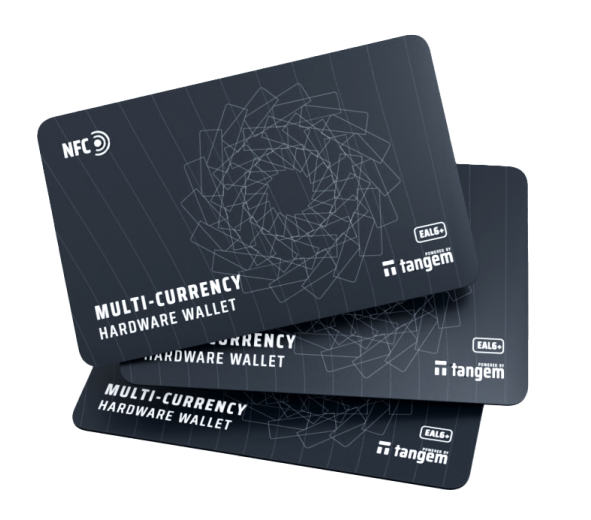
Okay, so check this out — if you’re curious about a specific implementation that pairs smart-card convenience with strong security controls, consider looking into the tangem wallet as an option that many users find practical and well-designed for card-based custody.
That device focuses on in-card key isolation and a minimal trust surface, and many people appreciate the physicality and simplicity while keeping strong cryptographic guarantees.
I’m not endorsing any single approach for everyone, though; evaluate features, audits, and user stories against your threat model and your tolerance for complexity.
Also — and this is important — check the recovery workflows closely, because recovery determines whether the card is a convenience or a single point of failure in the long run.
Whoa!
Let me walk through a short threat model sketch.
Adversaries can be local (thieves, coercion), remote (malicious software), or systemic (supply-chain compromise).
Each class of threat requires different mitigations: local threats need plausible deniability and physical protections; remote threats need in-chip signing and host isolation; systemic threats demand audited manufacturing and transparency about firmware signing keys and provisioning processes, and you should demand that level of detail before entrusting a large sum to any single product.
I’m very aware this sounds like overkill for small holdings, but risk scales nonlinearly with asset size and visibility.
Seriously?
Yes — for small amounts, simplicity might trump absolute security.
For high-value holdings, consider multiple layers: cold cards, multisig among diverse devices, and geographically separated backups for resilience.
For businesses or funds, combine hardware cards with institutional policies, audits, and legal agreements to close gaps that consumer workflows don’t cover.
On one hand, this looks complex; on the other, it’s insurance against catastrophic loss, and people buy insurance for cars and houses — crypto should be no different.
Whoa!
Quick practical tips before I wrap up.
1) Test recovery flows immediately after setup — don’t trust assumptions.
2) Use in-chip signing cards and verify firmware provenance, particularly for devices you carry daily.
3) Treat the physical card like a high-value object — multiple copies stored in different secure places make sense, but avoid identical backups that create systemic risk.
Final thoughts and a small contrarian note
Whoa!
I’m conflicted in a useful way.
Smart-cards solve many human problems around seed phrases, but they also introduce new operational considerations and recovery complexity that people underestimate.
Honestly, I’m excited about card-based custody because it aligns usability with strong crypto primitives, but I’m also wary of hype cycles that push single-solution thinking and make users complacent about backups and policies.
So yeah — be curious, be skeptical, and design for real failures not just for ideal use cases.
FAQ
How is a smart-card different from a typical hardware wallet?
Short answer: form factor and provisioning. Smart-cards are card-like and often designed for tap-and-sign or near-field interactions, and many models focus on single-chip in-card signing to minimize attack surfaces, whereas traditional hardware wallets might offer broader app ecosystems but larger host interaction surfaces.
Can a smart-card be cloned or extracted?
It depends on the secure element and the vendor’s manufacturing controls; well-designed secure elements resist cloning and key extraction, but nothing is invulnerable. Look for audited designs and transparent supply-chain procedures to reduce systemic risks.
What’s the recovery story if I lose the card?
Recovery varies: some schemes use a backup card or multisig arrangements, others support split-key recovery with custodial partners. The essential step is to understand and test recovery before relying on the card for significant value; don’t assume recovery will be painless.